

Brand dynamics
Group Real-Time Dynamics And Cutting-Edge Information In The Field Of One Health

Healthy Yuan has the appearance of a top Chinese Big Pharma company
Published Time:
2023-12-29
Needless to say, innovative drugs are the strongest main artery of the long-term operation of China's pharmaceutical industry.
After experiencing the capital winter in the primary and secondary markets and the disruption of the epidemic, the "cold adjustment" has brought rationality back to China's innovative drug industry, and the market environment, with the marginal diminishing impact of medical reforms, is about to usher in a warm spring.
Under the warm spring, what kind of innovative pharmaceutical companies can win the overall trend and the future?
Observing the industry, there are many companies that can be listed, each with its own strengths and preferences. The industry is always arguing about the differences and growth of "Biotech," "Biopharma," and "Big Pharma".
Benchmarking against mature markets in the US and Europe, although the number of the most competitive super pharmaceutical companies is an absolute minority, they can influence the direction of the global pharmaceutical market by leading the industry's innovation.
Therefore, the rise of China's innovative drug industry will inevitably require a group of companies that can become super "Big Pharma" seed players. By anchoring our observation scope, the listed companies are actually very few.
Compared to Hengrui Medicine ( 600276.SH), Fosun Pharma (600196.SH|02196.HK), and CSPC Pharmaceutical Group (01093.HK), which are surrounded by the aura of kings, and are exceptionally skilled in capital, and aggressively expanding with the backing of a conglomerate, the exceptionally low-key HealthGen (600380.SH) is easily overlooked.
However, low-key does not prevent HealthGen from making strategic moves in cutting-edge technologies and innovative drug pipelines.
Founded 30 years ago, HealthGen, after completing several major transformations, finally focused on unmet clinical needs, taking "innovative drugs and high-barrier complex preparations" as its development strategy.
This simple and clear strategic statement is constantly being demonstrated through various details, releasing to the market the belief of becoming a "leading and continuously innovative comprehensive pharmaceutical company in China".
1 |Acceleration
BD-style leap
When the development of the domestic innovative drug industry began to tend towards involution, technological breakthroughs are no longer the only way to determine the outcome.
This October, HealthGen released news that it had signed an exclusive licensing agreement with Guangzhou Fermion Technology Co., Ltd. (hereinafter referred to as "Fermion") for the latter's new analgesic drug FZ008-145 in mainland China and Hong Kong and Macao.
In the innovative drug industry, this "license-in" cooperation is nothing new, and some Biopharma companies even make a living from it, and are already very skilled at it.
But for HealthGen, this is a multi-effect "masterstroke," the details of which are worth pondering.
First of all, the "exclusive license" approach has clearly opened another window for HealthGen. In the past, the company has always emphasized its technological accumulation through self-research, and "license-in" has rarely been used.
However, in the past one or two years, while continuing to invest heavily in R&D and self-research, HealthGen has begun to accelerate its layout through cooperation with Biotech companies. Diversified methods are more efficient and less risky than relying solely on self-research, and the pipeline and product coverage will also be wider;
Furthermore, the small molecule innovative drug for which HealthGen has obtained exclusive authorization this time, FZ008-145, is a highly selective second-generation Nav1.8 inhibitor analgesic drug. This has added another piece to the puzzle of HealthGen's drug R&D pipeline.
And "analgesia" is also an area with significant clinical needs—moderate to severe acute pain relies on opioid treatment, which is developing into a disaster in North America and globally, and innovative solutions are urgently needed to replace it.
In terms of market size, the global analgesic market size was approximately US$91.14 billion in 2022, and the Chinese analgesic market size was approximately RMB 122.6 billion (Zhiyan Consulting data).
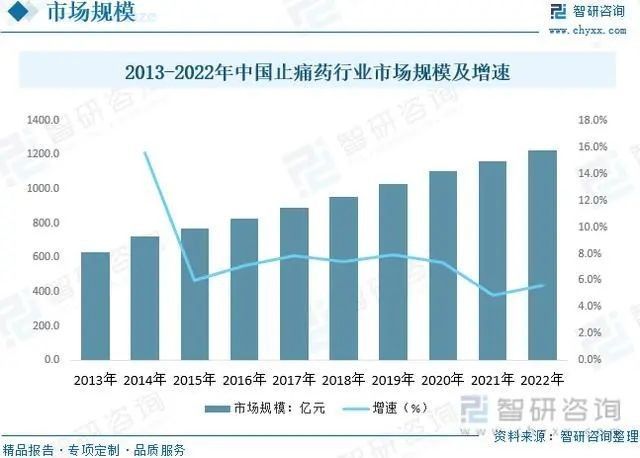
Obviously, HealthGen is also eyeing the ample potential of the analgesic market.
From the perspective of innovative drug targets, Nav1.8 has been proven to be a highly promising analgesic target. In fact, Pfizer, Eli Lilly, AstraZeneca, and other multinational pharmaceutical companies are very fond of this target and are developing innovative drugs for neuropathic pain.
FZ008-145's Nav1.8 target has currently obtained 5 POC-verified clinical data. Also in October this year, Fermion submitted an IND application to the CDE. HealthGen's "key point" is just right.
It must be said that this year's HealthGen BD work seems to have a "small universe, big explosion" feeling, and it must be given a "raise".
In addition to FZ008-145, HealthGen's BD also introduced the innovative influenza drug TG-1000 at a "reasonable price," as well as two innovative drugs in Phase I clinical trials and one pre-clinical drug in the respiratory field, and several projects in the final negotiation stage.
It must be emphasized here that this year in March, HealthGen also signed an exclusive license for Taijing Biology's influenza antiviral drug TG-1000 in mainland China and Hong Kong and Macao through a "license-in" approach.
TG-1000 can not only effectively block the replication and spread of influenza viruses, but also is expected to overcome the problem of drug-resistant virus strains, and also has a relatively wide effective treatment period. In short, it can solve a series of problems caused by the mutation of influenza viruses.
Currently, TG-1000 has entered Phase III clinical trials. This year's large-scale influenza and respiratory infections in autumn and winter have also verified the "precise" layout ability of HealthGen's BD working group in introducing TG-1000 to expand its R&D pipeline.
Whenever we mention the core competitiveness of innovative pharmaceutical companies, we always focus on breakthroughs in original technology and original new drugs. However, for a comprehensive pharmaceutical company like Health Yuan that is driven by innovation, obtaining innovative technologies and products through licensing, joint development, equity investment, and asset mergers and acquisitions is probably even more important.
Looking at the development history of global pharmaceutical giants, which one hasn't grown stronger and achieved greater success through
BD? Now, Chinese BigPharma companies have also realized this. The fact that they are aggressively poaching BD talent from the market shows that the BD capabilities behind the R&D pipeline layout are the key to Health Yuan's future success in telling the story of new drugs.
Two |Octopus
Pipeline Matrix
If you had to describe Health Yuan's innovative moves in one word, it would be “diversification”.
In its more than 30 years of growth, Health Yuan has covered chemical preparations, biological products, traditional Chinese medicine preparations, raw materials, diagnostic reagents, and health foods, and all have mature, multi-level R&D institutions.
Such broad market coverage is not without a clear main line logic.
In fact, adhering to the dual-engine drive of “innovative drugs + high-barrier complex preparations”, and closely following “unmet clinical needs”, Health Yuan, like an “octopus”, extends its tentacles to disease treatment areas with significant clinical needs, such as respiratory, analgesia, digestive tract, assisted reproduction, mental health, and tumors, and continuously enriches its products and R&D pipelines in advantageous areas.
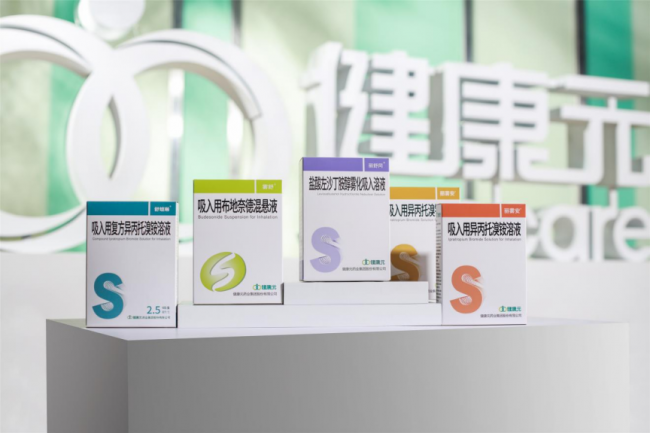
Among them, the most prominent advantage of Health Yuan is in the treatment of respiratory diseases.
Through more than ten years of R&D investment and technology platform construction, Health Yuan has 8 varieties and 12 specifications of listed products, as well as more than 30 respiratory-related products under development.
Health Yuan's matrix of listed products and R&D pipeline in the respiratory field covers all categories of asthma and COPD inhalation therapies. There is simply no comparable company in China with this kind of layout.
Last year, Health Yuan's independently developed new drug, tobramycin inhalation solution (Jianketo ®), was approved for marketing, becoming the world's first inhaled drug for the treatment of bronchiectasis. Jianketo is not only the first inhaled antibiotic in China, but more importantly, it solves the clinical treatment dilemma of bronchiectasis patients having no medicine available.
It's not just breakthroughs in self-research, introducing innovative drug varieties through BD is also becoming Health Yuan's “conventional weapon”.
As mentioned earlier, this year in the field of respiratory diseases, Health Yuan has acquired TG-1000, which has entered Phase III clinical research for the treatment of influenza A and B, and XYP-001, which is currently undergoing Phase I clinical trials for the treatment of idiopathic pulmonary fibrosis (IPF).
In the respiratory field, Health Yuan's BD approach is also very clear: firstly, it focuses on new targets and new mechanisms, seizing the opportunity to invest in large-molecule biological drugs and small-molecule oral drugs; secondly, it focuses on new drug delivery methods, with layouts in injections, inhalation preparations, and oral drugs; and thirdly, it expands into new indications, especially large-volume products in clinical phases II and III.
Independent research and development + external introduction and collaborative development constitute Health Yuan's relatively complete R&D and innovation management model, which not only raises the barriers to its complex preparations but also significantly improves the efficiency of its R&D pipeline layout, laying a solid foundation for sustainable performance growth in the longer term.
Actually, what Health Yuan doesn't need to worry about is its commercialization capabilities; its sales network covers all provinces in China and 80 countries and regions worldwide.
From the early cultivation of health product brands to the later incubation and operation of star drugs, and now to the systematic sales construction of innovative drugs, the “biggest weakness” of most innovative pharmaceutical companies is not a weakness for Health Yuan.
According to some publicly released information, Health Yuan is currently undergoing a digital strategic transformation, and a very important part of this is upgrading a “patient-centric” digital marketing ecosystem, rapidly replicating and extending the digital marketing model tested in the respiratory drug field to Health Yuan's advantageous sectors such as the digestive tract and mental health.
The so-called new digital marketing model is “empowering various links such as education, screening, diagnosis, treatment, and medication monitoring, connecting doctors, hospitals, patients, and pharmaceutical companies to form a closed loop, leveraging private traffic to leverage the huge market of outpatient chronic disease management, and achieving real-time interaction between consumers and brands”, which is also the confidence behind Health Yuan's continued introduction of innovative drug varieties.
Of course, the rise of China's super BigPharma will certainly rely primarily on the domestic market, but it is also time to accelerate the exploration of international markets.
Last year, Health Yuan's GDR listing on the SIX Swiss Exchange is a clear signal—it's time to accelerate the pace of going global. On the other hand, the company's BD is also continuously promoting international cooperation and external licensing of innovative products and pipelines.
Three |Riding the Wave
Expanding the Innovation Ecosystem
True BigPharma companies must have growth curves driven by systematic and systematic innovation. So how does Health Yuan continuously deliver on its innovative value?
Self-research as the foundation and introduction as support—this is only the main structure of Health Yuan's current strategic framework. However, Health Yuan and its other listed subsidiary, Lizhu Group ( 000513.SZ), are also investing in more cutting-edge technologies through large-scale equity investments.
Health Yuan, with its increasingly complete R&D and industrialization system, is actually using The layered progression of "self-research—introduction—joint investment" allows for short, medium, and long-term product and technology planning, representing a growth path towards becoming a top BigPharma company.
For example, in the AI medical and pharmaceutical application fields, AI-assisted new drug development and AI-assisted tumor diagnosis are two market segments that large comprehensive pharmaceutical companies are closely eyeing.
In the second half of this year alone, pharmaceutical companies such as Fosun Pharma, CSPC Pharmaceutical Group, and Yunnan Baiyao have reached strategic partnerships with AI technology companies such as Insilico Medicine, Crystal Pharmatech, and Huawei, to advance their AI-driven new drug design, development, and clinical research.
In early 2021, HealthGen and Tencent Quantum Lab established a strategic partnership to jointly build a quantum AI computing-enabled microbial synthetic biology research and related drug development system.
This system's research direction covers cutting-edge technologies such as biological big data analysis, protein computational simulation and structure prediction, and genome-wide customized creation, assisting in research on small molecules, macromolecules, and even microbial living cell drugs, including the assembly of expression components and molecular structure simulation—all of which are emerging hot paths in innovative drug development.
AI drug research is undoubtedly an unavoidable technological direction for pharmaceutical companies in the future. In this field, HealthGen, through its subsidiary Lizhu Group, has also invested in Beijing InfiniPharma Technology Co., Ltd. In June of this year, InfiniPharma released China's first GPT system in the pharmaceutical field—PharmGPT, a system that can stabilize the drug development success rate at over 20%.
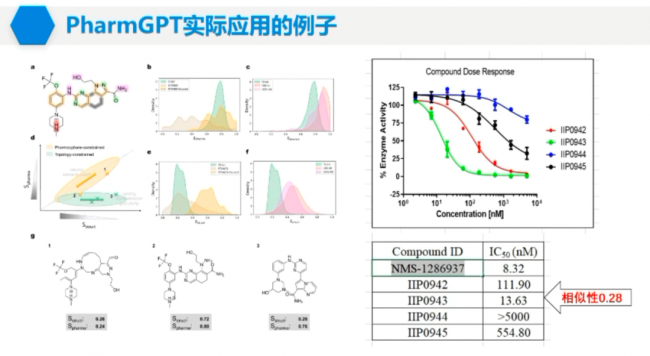
A report released by a global biotechnology industry organization shows that between 2011 and 2020, the average success rate of 9704 drug clinical development projects monitored in the report, from Phase I to obtaining US FDA approval, was only 7.9%, with an average time of 10.5 years.
Clearly, this investment in AI drug research is of extremely high strategic value to HealthGen in the field of innovative drugs.
In addition, HealthGen has also invested early in LungLife AI and Zhuhai Saint-M Bio-Diagnostic Technology Co., Ltd. in the United States. These two companies in the field of AI medical diagnosis, the former continuously improves its model data research on early screening and diagnosis of pulmonary nodules and lung cancer, while the latter excels in providing digital health management solutions for early lung cancer diagnosis.
From the current development perspective, the application of AI diagnostic technology in early lung cancer diagnosis may be the first direction to achieve a "qualitative change" in early tumor screening and diagnosis. HealthGen's investment in the above two companies undoubtedly puts it at the forefront of AI diagnosis.
In focusing on "unmet clinical needs," HealthGen is also expanding its innovative ecosystem, especially in the currently hot field of small and large molecule innovative drug research.
Lizhu Group's investment in Elicio Therapeutics (ELTX.NASDAQ) went public on the Nasdaq market in June this year. It focuses on therapeutic cancer vaccines, which has considerable market potential.
There is also Xin Yuan, which focuses on the research and development of small molecule oral drugs for the treatment of chronic gout; and Shanghai Coenzyme Biotech, with an academician background and focusing on the development of new generation kinase inhibitor drugs. These two domestic companies are star companies in the field of small molecule innovative drugs.
In the field of macromolecular drugs, Beijing Green Bamboo Bio, invested in by Lizhu Group, is known as the "first stock of herpes zoster," and was listed on the main board of the Hong Kong Stock Exchange in early May; another company, Shanghai Jinsen Bio, which is committed to the research and development of bispecific antibodies for solid tumors, has two products selected for the poster session of the 2023 American Society of Clinical Oncology (ASCO) annual meeting.
The products and research pipelines of the above companies will further enrich HealthGen's BD's "project pool" for introducing new drugs, thus bringing more monetizable commercial value.
In the areas of gene editing, cell therapy, and synthetic biology, which are likely to bring revolutionary technologies to medicine and even life engineering, HealthGen, through Lizhu Group, has also invested globally in companies such as Beam Therapeutics (BEAM.NASDAQ) and Carisma Therapeutics.
It is not difficult to see that HealthGen has penetrated almost all trend-setting cutting-edge technology fields, and its investment targets are all global top companies in their respective fields.
Such an expanded innovative ecosystem allows it to connect with the global cutting-edge innovation system, making it more conducive to future business expansion and cooperation models in the international market.
Quick Navigation
+86 755-33268688 | Service Hotline

Official WeChat Official Account
Copyright © 2025 Joincare Pharmaceutical Group Industry Co., Ltd. ALL Rights Reserve.