

Brand dynamics
Group Real-Time Dynamics And Cutting-Edge Information In The Field Of One Health

The Vaccine "Newbie" and the Healthy Yuan's Gambit
Published Time:
2022-09-08
Good things take time!
After more than two years of research and development and clinical trials, Zhuhai Lizhu's recombinant protein COVID-19 vaccine V-01 has finally appeared on the list for emergency use in sequential booster immunization.
After the close of trading on September 2, Lizhu Group (000513.SZ) and its holding company Healthyuan (600380.SH) issued a joint announcement stating that, upon the suggestion of the National Health Commission and after review by the National Medical Products Administration, V-01 has been approved for emergency use in sequential booster immunization against novel coronavirus.
Another domestic vaccine giant, CanSino Biologics (688185.SH\06185.HK), also received emergency use authorization for its inhaled adenovirus vector COVID-19 vaccine.
To date, of the 45 COVID-19 vaccines undergoing clinical trials in China, 5 have been approved for market and 4 for emergency use.
Interestingly, this news was announced by Academician Zhong Nanshan at the "2022 Health and Industrial Technology Innovation Service Conference" (hosted by the Ministry of Industry and Information Technology, the National Health Commission, and the Beijing Municipal Government) during the ongoing China International Fair for Trade in Services (CIFTIS).
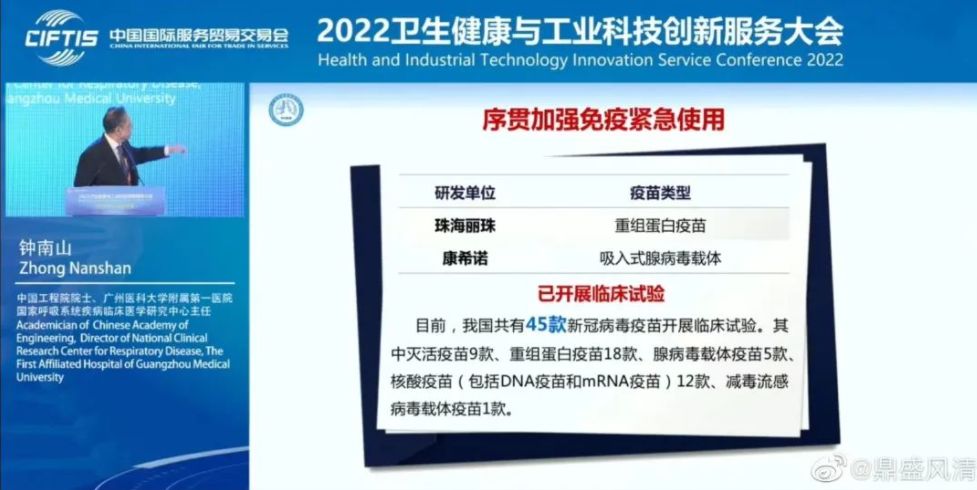
The timing and the choice of venue—an international trade services fair—highlight the government's importance and attention to these two vaccines.
Stimulated by this news, CanSino Biologics (688185.SH) saw its stock price surge by 11.51% the following week, while Healthyuan and Lizhu Group's stock prices remained relatively unchanged.
Why the difference in the secondary market?
It's not hard to understand. During the global outbreak of COVID-19 in 2020, CanSino Biologics, with its halo effect, was enthusiastically sought after by the market upon its listing and was considered one of the leaders in the vaccine sector. Its every move naturally attracts investor attention.
Healthyuan and Lizhu Group, two long-established pharmaceutical companies with a shared history, are relative newcomers to the vaccine field. Coupled with their low-key corporate style, market attention has waned as the vaccine fever subsided.
But this doesn't mean that the V-01 vaccine has no value contribution to Healthyuan and Lizhu Group.
In fact, the breakthrough in the COVID-19 vaccine field has significantly improved the listed companies' R&D capabilities, technological prowess, industrialization maturity, and market strategy, significantly enhancing their investment value.
Part 1| Breaking the Shell
An Unsurprising Move
“Due to the continued increase in R&D investment, Lizhu Monoclonal Antibody's impact on Healthyuan's attributable net profit is approximately -220 million yuan this year,” a special note in Healthyuan's 2022 mid-year performance report.
The negative impact of Lizhu Monoclonal Antibody on Healthyuan's performance is mainly due to the direct R&D investment in the V-01 recombinant protein vaccine. Therefore, this was expected.
In 2021, Healthyuan Group's R&D investment reached 1.85 billion yuan, a year-on-year increase of 46.75%. In terms of R&D investment scale for chemical pharmaceutical listed companies, Healthyuan is second only to the two giants, Hengrui Medicine and Fosun Pharma, both with market values exceeding 100 billion yuan.
In the first half of this year, the company's total R&D investment was 800 million yuan, an increase of 15.39% year-on-year. Even during a period of low industry investment, Healthyuan appears to be maintaining a certain rate of R&D investment growth.
In fact, over the past five years, Healthyuan's R&D investment has had a compound annual growth rate of 21%. The reason for such high compound growth in R&D investment is Healthyuan's consistent implementation of a "dual-engine driving strategy" of innovative drugs and high-barrier complex preparations.
The V-01 vaccine was born from the implementation of this development strategy, although the outside world did not expect Healthyuan to "go against the grain" and enter the vaccine field.
After all, a number of leading vaccine companies have emerged in China after one or two decades of development, and new-generation vaccine companies that have rapidly risen to prominence in the past five or six years are approaching the capital market. Competition among vaccine companies is fierce during the pandemic.
Looking at Healthyuan, its development layout in recent years spans raw materials, intermediates, traditional Chinese medicine, biological drugs, diagnostic reagents and equipment, and health products, making it diverse and rich. Now, with the addition of the vaccine piece to the puzzle, it seems a bit dazzling.
However, understanding Healthyuan's development history makes its entry into the vaccine field unsurprising.
In 2010, Lizhu Group established Lizhu Monoclonal Antibody (Healthyuan's equity stake is 55.86%), shifting its R&D focus to biological preparations.
In June 2019, before the COVID-19 pandemic, Lizhu Group invested in a biotechnology company called Zhuhai Lifanda. This company, with its independent mRNA production and drug delivery technology platform, later became one of only three companies in China to obtain clinical approval for mRNA COVID-19 vaccines.
However, in mid-May 2021, Lizhu Group withdrew its investment in Lifanda, which was subsequently acquired and controlled by another vaccine company, Aimme Vaccines, in the same month.
The divestment from Lifanda was not regrettable, because in July 2020, Lizhu Monoclonal Antibody and the Institute of Biophysics, Chinese Academy of Sciences, launched the development of the V-01 COVID-19 recombinant protein vaccine, which received clinical trial approval from the National Medical Products Administration in early 2021.
The primary data analysis results of the Phase III clinical trial of V-01 completed earlier this year showed that the sequential booster immunization of V-01 vaccine achieved an absolute protective efficacy of 61.35%, meeting WHO standards; the protective efficacy for high-risk individuals with underlying diseases reached 71.83%.
In addition, the data showed that the V-01 vaccine has good protection against infection caused by the Omicron variant. This also added considerable weight to its approval for emergency use in sequential booster immunization.
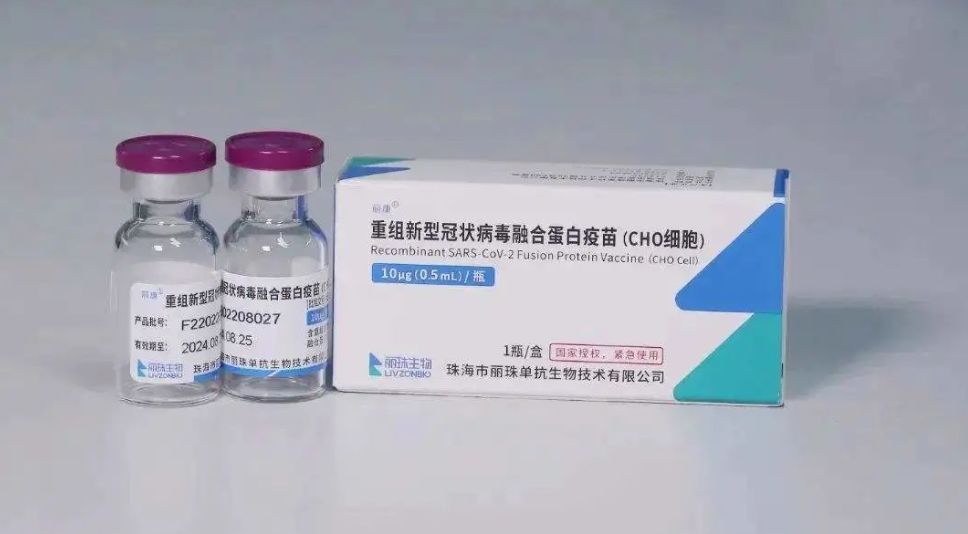
From project initiation to inclusion in the domestic emergency use list, the new V-01 vaccine took only 25 months, but more importantly, Lizhu Monoclonal Antibody, with 12 years of R&D accumulation, has finally broken through.
For Healthyuan and Lizhu Group, this is a major step forward.
Part 2| Maturity
Autonomy of the Industrial Chain
The V-01 recombinant protein COVID-19 vaccine is the result of high-tech transformation from the Chinese Academy of Sciences, employing innovative molecular design and possessing independent intellectual property rights.
Peng Hua, head of the immunotherapeutic research group at the Institute of Biology, Chinese Academy of Sciences, is very confident in the clinical trial results of V-01, stating that it is comparable to internationally approved nucleic acid and protein vaccines and can effectively combat various variants, with broader protection after enhanced immunization.
More importantly, V-01 has independent intellectual property rights and a high rate of domestic material production, ensuring supply chain stability after industrialization and mass production.
According to previous research by "Polypeptide Chain", the V-01 vaccine from Lizhu Monoclonal Antibody has achieved a 90% domestication rate in raw materials and is working on replacing the remaining imported materials.
It is worth mentioning that the V-01 vaccine uses a common aluminum adjuvant, which significantly reduces the side effects of protein vaccines while breaking the dependence on patented, imported strong adjuvants, contributing to sustained and stable production capacity.
The guaranteed vaccine production capacity also demonstrates the mature manufacturing, production capacity output, and market coverage capabilities of Health Yuan and Lizhu Group.
In most cases, external attention to vaccines focuses more on the R&D end, but in reality, the biggest factor affecting the market entry of vaccine products lies in the industrial capabilities.
Before the COVID-19 pandemic, the global vaccine industry chain was controlled by European and American countries, and key raw materials, in addition to core technologies, were subject to export restrictions to maintain their status as vaccine powers.
Therefore, Very few countries currently possess independent control over the vaccine industry chain.
Specifically, for vaccine companies, even with superior technological achievements in R&D, transforming them into mass-produced products in the market is a real test. This is the biggest reason why many vaccine companies have missed market opportunities.
Two months ago, the U.S. FDA granted Emergency Use Authorization (EUA) to Nuvaxovid, the first COVID-19 vaccine based on recombinant protein technology. However, its manufacturer, Novavax, had the opportunity to launch Nuvaxovid on a large scale a year earlier.
Novavax is considered one of the most promising COVID-19 vaccine developers in the United States, but it has never launched a product into the market in its decades of existence. The main reason for missing the COVID-19 vaccine launch window was Novavax's production capacity shortage.
Initially, Novavax established production bases around the world to adapt to different regulatory environments and markets, but later switched to using the production process and initial data from the Serum Institute of India. This resulted in Novavax's inability to quickly build capacity and bring products to market after the COVID-19 outbreak.
Now let's talk about the Serum Institute of India, which provides production capacity for Novavax.
In fact, with an annual production capacity of 1.5 billion doses and supplying 20 vaccine products to 165 countries worldwide, The Serum Institute of India is the world's largest vaccine manufacturer.
Because of this, India, lacking core patented technologies, has become the largest vaccine producer and exporter, accounting for over 30% of the global vaccine market.
Of course, India is a vaccine powerhouse, but not necessarily a vaccine superpower.
Looking back at Health Yuan's vaccine strategy: At the same time as Lizhu Monoclonal Antibody was developing the V-01 COVID-19 vaccine, the company made large-scale investments in the transformation of its bulk drug production line and preparation production line, and obtained a vaccine production license early on.
Currently, Lizhu Monoclonal Antibody's annual production capacity for bulk drugs has reached 3.5 billion doses, and the preparation capacity is expected to reach 1.5 billion doses in 2022. It can also continue to increase preparation capacity through various methods such as adding preparation production lines, multi-dose production, and contract manufacturing, depending on demand.
Front-end R&D capabilities + advanced platform development technology + comprehensive quality management system capacity + domestication of raw materials and materials. Health Yuan, which firmly holds the independent control of the vaccine industry chain, has also shown its increasingly mature side to the market.
Three | The Journey
Differentiated Market Strategy
Emergency use authorization is just a milestone for V-01. The market challenges are probably what investors are more concerned about.
As of August 31, 2022, a cumulative total of 343277.8 million doses of COVID-19 vaccines have been reported administered in 31 provinces (autonomous regions, municipalities directly under the Central Government) and the Xinjiang Production and Construction Corps.
The overall basic immunization rate has reached 90%, and the booster immunization rate has exceeded 70%. Investors seem not to have much hope for the market space of the fourth sequential booster immunization.
The performance reports released by listed vaccine companies in the first half of this year show an overall decline in revenue growth, with most companies experiencing negative net profit growth. The most direct reason is the significant decline in COVID-19 vaccine inoculations compared to 2021.
Some securities research institutions believe that product upgrades and domestic substitution will still create incremental opportunities for domestic COVID-19 vaccines, but most securities firms have lowered their expected sales of domestic COVID-19 vaccines in 2022.
There may still be some room to mine in the international market, but there is not much time left for latecomers.
According to Airfinity's estimated data, the total global production of COVID-19 vaccines reached 11.15 billion doses in 2021, and may still exceed 9 billion doses in 2022. However, starting in 2023, the demand for COVID-19 vaccines may decline significantly to 2.2 billion to 4.4 billion doses per year.
In the face of such a market situation, Health Yuan probably anticipated it when Lizhu Monoclonal Antibody started the project. So why take the risk and invest heavily in the development of a COVID-19 vaccine?
We can explain Health Yuan's strategic motivation in vaccines from two dimensions.
The first dimension is investment value . Investing in vaccines is not just for a single vaccine product, but more importantly, to cultivate a mature and efficient technology platform and drive improvements in industrialization aspects such as cell culture technology, purification technology, and preparation technology.
Obviously, in this dimension, Lizhu Monoclonal Antibody, a newcomer to vaccines, has maxed out its skill points. Its R&D innovation, technological strength, and industrialization capabilities are all recognized by the market.
The second dimension is market strategy. Due to the adoption of a new recombinant protein technology route, Lizhu Monoclonal Antibody should be well aware that the cycle from R&D to market launch is longer than that of inactivated vaccines, so from the beginning it may have targeted sequential booster vaccinations and overseas markets.
Let's look at this data: Of the 11.15 billion doses of vaccines produced globally in 2021, approximately 4.5 billion doses came from China, followed by 2.3 billion doses from Europe, 1.6 billion doses from India, and 950 million doses from the United States.
Who would have imagined that in the global vaccine industry, China, once silent, would overnight grow into a solid vaccine powerhouse?
Looking for internal reasons, Chinese innovative pharmaceutical companies' move into overseas markets is the biggest driving force, and the COVID-19 vaccine has become the key for Chinese pharmaceutical companies to open up the world.
Even if the demand for COVID-19 vaccines in the international market has peaked, Lizhu Monoclonal Antibody's V-01 will still resolutely go global, becoming a gold-lettered business card presented by HealthGen in building an international pharmaceutical brand.
While applying for emergency use in China, Lizhu Monoclonal Antibody has simultaneously launched registration overseas. The EUA (Emergency Use Authorization) materials for the Philippines, Indonesia, and Malaysia have been submitted, and the registration materials for the export of bulk drug substance to Pakistan have also been submitted; the application for WHO's EUL (Emergency Use Listing) is also under communication.
There is another key piece of information that has been overlooked.
In December last year, Lizhu Monoclonal Antibody announced the neutralization test results of China's first bivalent COVID-19 vaccine - V-01-351; in July this year, the research data on the sequential booster vaccination of the bivalent vaccine V-01D-351 after the inactivated vaccine was published in the Journal of Clinical Medicine.
What is the significance of bivalent vaccine development?
Simply put, even with complete vaccination, antibody concentration will decrease with human metabolism, which means that the protective power of the vaccine also has an effective period. And judging from the current situation of COVID-19 variant strains, more variant strains may appear in the future.
This brings another possibility: COVID-19 vaccines will be like influenza vaccines, with multivalent vaccines available for annual vaccination to prevent various variant strains of the COVID-19 virus.
This possibility is quite likely. Therefore, V-01 is only the starting point for HealthGen's vaccine development.
Source: Polypeptide Chain
Quick Navigation
+86 755-33268688 | Service Hotline

Official WeChat Official Account
Copyright © 2025 Joincare Pharmaceutical Group Industry Co., Ltd. ALL Rights Reserve.