

Brand dynamics
Group Real-Time Dynamics And Cutting-Edge Information In The Field Of One Health

Clinical exploration of afatinib on uncommon mutations in cerebrospinal fluid
Published Time:
2019-08-06

A series of research findings on the exploration of the guiding significance of cerebrospinal fluid liquid biopsy technology for the medication of lung cancer brain metastasis, jointly conducted by Director Jiang Rong and Chief Physician Ma Chunhua from Nankai University Affiliated Huanhu Hospital (Tianjin), Zhuhai Shengmei Biological Diagnostic Technology Co., Ltd., and Zhuhai Lizhu Gene Detection Technology Co., Ltd., continues to emerge. Recently, a case report on the detection of a rare EGFR mutation (G719A) in cerebrospinal fluid, followed by the use of afatinib with good therapeutic effect, was published in the oncology professional SCI journal Frontiers in Oncology (IF=4.137). Shengmei Biology and Lizhu Gene are among the first companies in China to launch cerebrospinal fluid liquid biopsy services, and their series of research on cerebrospinal fluid liquid biopsy was also presented at the 2019 ASCO in the United States. (Dry goods | Cerebrospinal fluid ctDNA CTC NGS preliminary results unveiled at ASCO, which is of great significance to clinical decision-making) High-quality clinical evidence has demonstrated that cerebrospinal fluid liquid biopsy can play an important role in the precise diagnosis and treatment of lung cancer.
Patient Case
May 2016: Male patient, 32 years old, diagnosed with lung adenocarcinoma. Blood NGS: EGFR G719A (0.12%), C797S (0.04%). Docetaxel combined with cisplatin chemotherapy.
February 2017: Follow-up chest CT showed progression of lung lesions, gemcitabine combined with carboplatin chemotherapy.
April 2017: Follow-up chest CT showed progression of lung lesions, pemetrexed chemotherapy.
June 2017: Dizziness accompanied by nausea and vomiting, head MRI enhancement showed linear abnormal high signal shadows in the medulla oblongata, pons, and ventral and dorsal midbrain, suggesting meningeal metastasis. Blood sample gene mutation detection (ddPCR method) showed no EGFR sensitive mutations, whole-brain radiotherapy was performed.
April 2018: Systemic progression, bevacizumab, and temozolomide treatment, the patient's headache and nausea symptoms were not significantly relieved. The patient's general condition was very poor, with an estimated survival time <1 month, KPS score 10-20, critically ill, "lung cancer meningeal metastasis" hospitalized. Physical examination: Vital signs were stable, consciousness was clear, spirit was poor, eyes lacked luster, pupils were equal in size and round, tongue was in the center, neck was soft without resistance, breath sounds were coarse in both lungs, and no obvious dry or wet rales were found. Limb muscle strength was grade IV, muscle tone was normal, and bilateral Babinski signs were negative. Head CT showed dilatation of the supratentorial ventricular system, widening of the sulci and cisterns. Cerebrospinal fluid pressure was 20 cm water column.
May 2018: Gene detection, cerebrospinal fluid, EGFR G719A (55%), peripheral blood negative. Cerebrospinal fluid CEA 9470ng/ml.
June 2018: Afatinib 30mg gd treatment. Headache significantly improved, KPS score 60 points, cerebrospinal fluid CEA 2111ng/ml, discharged from hospital.
August 2018: Gene detection, cerebrospinal fluid, EGFR G719A (22%), peripheral blood negative.
March 2019: Follow-up, good spirit, KPS score between 60-70 points.
As of the official publication of this case report (July 24, 2019), the patient was still alive.
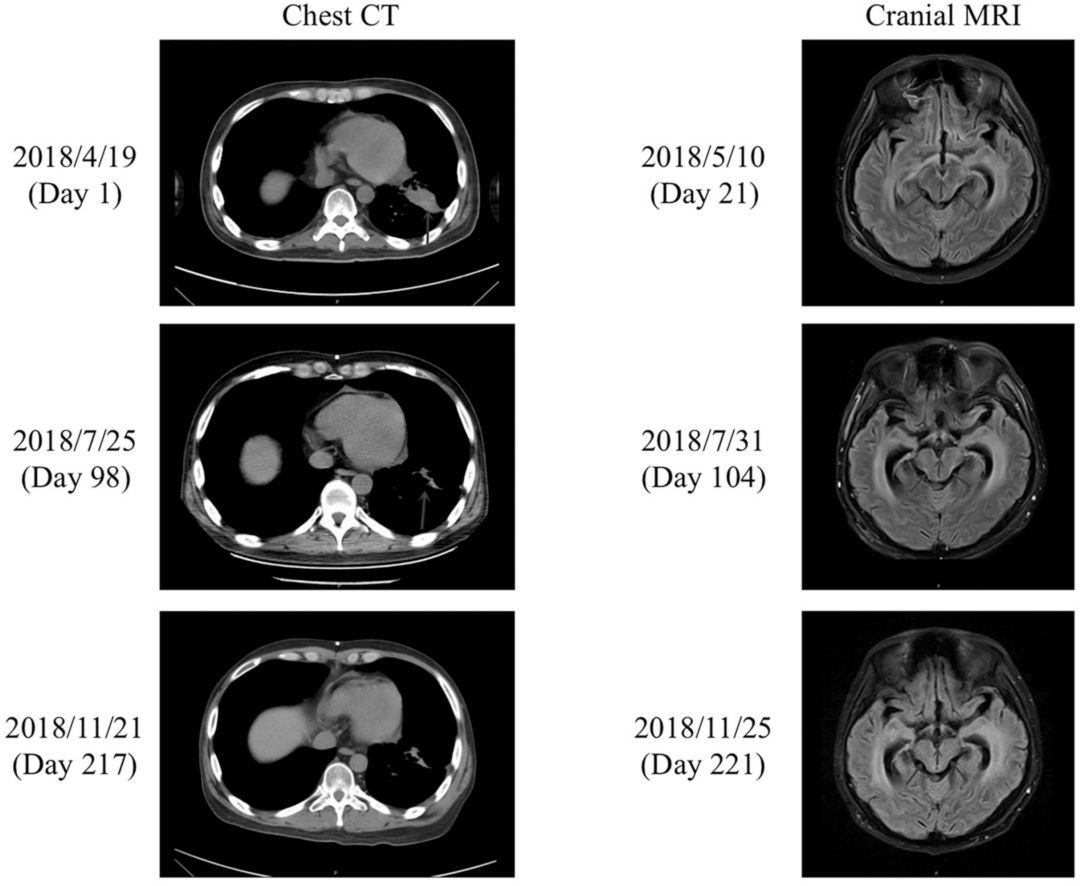
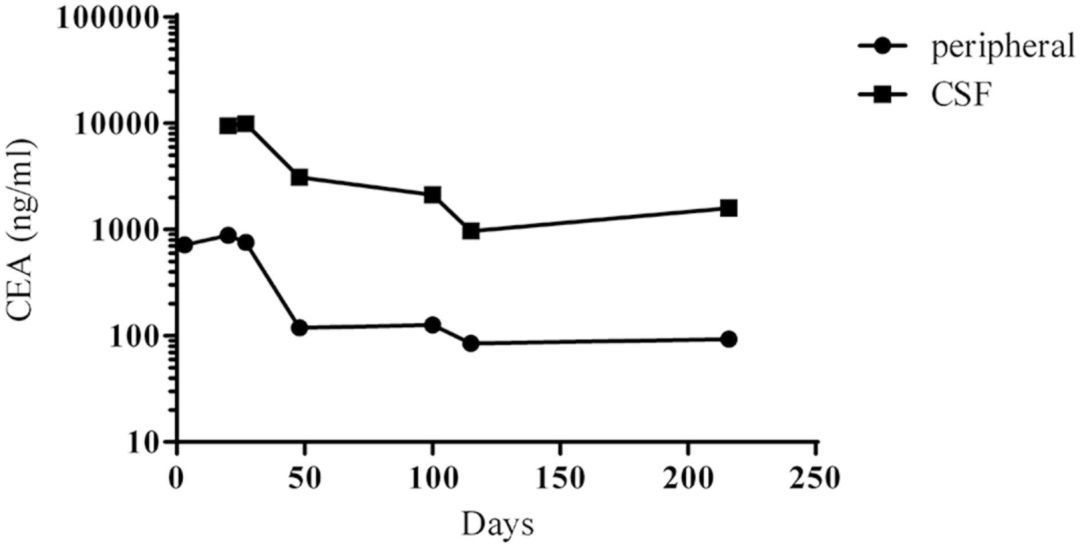
Expert Commentary: In May 2018, the patient's survival time was estimated to be 1-2 months. After receiving multiple lines of treatment for lung cancer and brain metastasis, lumbar puncture was performed to collect cerebrospinal fluid, and peripheral blood was collected intravenously for gene detection. The abundance of EGFR G719A mutation in cerebrospinal fluid was as high as 55%, while it was not detected in blood. Considering that the US FDA approved afatinib for the treatment of patients with metastatic non-small cell lung cancer carrying EGFR non-resistant rare mutations (S768I, L861Q, and G719X), the doctor recommended that the patient take afatinib, and good clinical results were obtained, with a simultaneous decrease in CEA levels. This case shows that cerebrospinal fluid is more suitable than peripheral blood for guiding clinical medication and disease assessment in patients with brain metastasis of tumors. Under the concept of precision medicine, the clinic needs more precise detection to achieve precise treatment for patients.
About Lung Cancer Brain Metastasis
In newly diagnosed NSCLC patients, the incidence of brain metastasis is around 10%, and approximately 25-40% of patients will develop brain metastasis during the course of their disease. Patients with brain metastasis have a poor prognosis, with a natural average survival time of only 1-2 months. In recent years, with the application of second- and third-generation TKI drugs, a glimmer of hope has been brought to patients with brain metastasis. The effectiveness of drug treatment for brain metastatic tumors depends on the tumor's sensitivity to the drug. Therefore, obtaining the mutation profile of the metastatic lesion to guide targeted therapy is particularly crucial.
About Cerebrospinal Fluid Detection
Cerebrospinal fluid is a colorless and transparent fluid located in the ventricles and subarachnoid space, which can directly reflect the molecular mutation profile of brain metastasis. As early as 2015, Nature Communication published a study showing that cerebrospinal fluid is more accurate than peripheral blood in reflecting the molecular characteristics of lung cancer brain metastasis lesions. Even when peripheral blood testing is negative, driver mutations can be effectively detected in cerebrospinal fluid, and the mutation abundance reflected in cerebrospinal fluid is closely correlated with disease progression.
In 2018, the expert consensus on the diagnosis and treatment of lung cancer brain (meningeal) metastasis pointed out that the cerebrospinal fluid mutation gene profile of patients with meningeal metastasis is different from that of the primary tumor and blood ctDNA, and cerebrospinal fluid can detect mutated genes. For those who have the conditions, NGS detection of cerebrospinal fluid is recommended.
In 2019, the Shanghai expert consensus on the diagnosis and treatment of non-small cell lung cancer brain metastasis proposed that the preferred source of samples for gene detection is tumor tissue (surgical resection or puncture biopsy). When it is difficult to obtain tissue samples, blood, pleural or peritoneal effusion, and cerebrospinal fluid can also be used for detection.
Quick Navigation
+86 755-33268688 | Service Hotline

Official WeChat Official Account
Copyright © 2025 Joincare Pharmaceutical Group Industry Co., Ltd. ALL Rights Reserve.