

Brand dynamics
Group Real-Time Dynamics And Cutting-Edge Information In The Field Of One Health

In the "Tai Tai Oral Liquid" trademark infringement case, the infringing party was ordered to pay 2 million yuan in compensation.
Published Time:
2019-12-03
Many people are familiar with "Tai Tai Oral Liquid," especially its advertising slogans such as "A new Tai Tai every day," "Full of femininity, Tai Tai Oral Liquid," and "It's good to be a woman." These slogans captured the hearts of many women at the time, making it a legendary brand in China's burgeoning health product market of the 1990s and supporting the entrepreneurial myth of a corporate empire.
"Tai Tai Oral Liquid" is a national health product officially launched on March 8, 1993, by Joincare Pharmaceutical Group Industry Co., Ltd. (formerly Shenzhen Tai Tai Health Food Co., Ltd.). The "Tai Tai" trademark was first registered on August 4, 1994, for Class 30 non-medical nutritional liquids. In 2002, it was recognized as a famous trademark in Guangdong Province, and in 2005, it was recognized as a well-known trademark in China. Recently, a trademark infringement case concerning "Tai Tai Oral Liquid" was concluded, with the infringing party ultimately ordered to pay compensation of 2 million yuan.
Basic Case Details
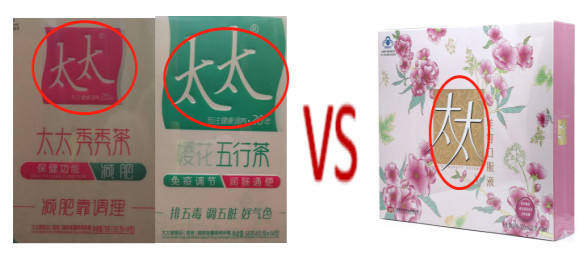
"Tai Tai Oral Liquid" believed that Tai Tai brand "Xiu Xiu Tea" and "Sakura Wu Xing Tea" constituted trademark infringement and unfair competition, so it sued the other party and sought compensation. After the first instance trial in Guangzhou Haizhu District Court and the second instance trial in Guangzhou Intellectual Property Court, "Xiu Xiu Tea" and "Sakura Wu Xing Tea" were finally found guilty of infringement in the final judgment, and ordered to compensate the plaintiff 2 million yuan.
Plaintiff's Claim:
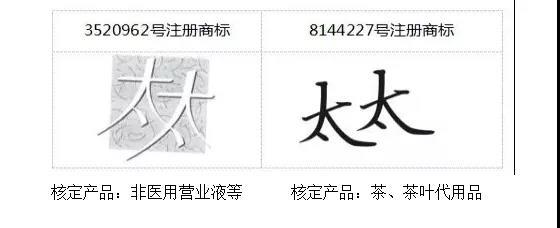
The plaintiffs, Jiankangyuan Company and Tai Tai Pharmaceutical, jointly claimed that they jointly own the exclusive right to use the No. 3520962 "Tai Tai" registered trademark (hereinafter referred to as the "disputed right trademark"), which is designated for use on goods in Class 30, including non-medical nutritional liquids. Through long-term and extensive publicity and use of "Tai Tai Oral Liquid," it has gained widespread popularity and reputation. The defendant, Kaigu Company, without permission, privately used this trademark on its "Xiu Xiu Tea" and "Sakura Wu Xing Tea" health products, and misleadingly promoted them, causing the public and consumers to mistakenly believe, thus constituting trademark infringement and unfair competition. The plaintiffs requested the court to order Kaigu Company to cease infringement and compensate for economic losses of 2 million yuan.
Defendant's Defense:
Tai Tai Health Products (Hong Kong) International Group owns the No. 8144227 "Tai Tai" registered trademark, designated for use on tea and tea substitutes in Class 30. The defendant used this trademark and obtained authorization from the trademark owner, which is compliant and legal. The plaintiff's product is Tai Tai Oral Liquid, a non-medical nutritional liquid, while the defendant's product is tea and tea substitutes. The two are neither identical nor similar products, and therefore do not constitute infringement. It also claimed that the defendant and its related enterprises used the Tai Tai trademark before the plaintiff, and have invested a lot in advertising and promotion, and have their own consumer base, and will not cause confusion with the plaintiff's brand. Therefore, it does not constitute trademark infringement or unfair competition, and requests the court to dismiss the plaintiff's claims.
Court Findings:
The No. 8144227 "Tai Tai" registered trademark for which the defendant obtained authorization was declared invalid by the Trademark Review and Adjudication Board on June 19, 2018. Tai Tai Health Products (Hong Kong) International Group filed an administrative lawsuit with the Beijing Intellectual Property Court regarding this case, and the administrative lawsuit is currently under trial.
The infringing goods "Tai Tai Xiu Xiu Tea" and "Tai Tai Sakura Wu Xing Tea" clearly indicate that they are health foods made mainly from various Chinese herbal medicines, and should belong to the category of "weight-loss tea, medicinal tea, and medicinal herbal tea," which are the same type of goods as the designated goods of the disputed right trademark, both belonging to health products. The infringing mark used on the outer packaging of the infringing goods is the same in terms of text, font, and text arrangement as the disputed right trademark, and the font and text background are highly similar. The above similarities make it difficult for ordinary consumers to notice and distinguish these differences, which is enough to mislead consumers and cause confusion about the source of the goods. The infringing mark and the disputed right trademark are similar.
In summary, the court determined that the defendant, without the plaintiff's permission, used a trademark similar to the well-known trademark on similar goods, infringing on the plaintiff's exclusive right to use the trademark.
Judgment:
On January 31, 2019, the Guangzhou Haizhu District Court rendered a first-instance judgment, ordering the defendant Kaigu Company to immediately cease infringement and compensate the plaintiff for economic losses of two million yuan, and to publish a statement to eliminate the impact in nationally distributed newspapers.
After the verdict, Kaigu Company appealed. The Guangzhou Intellectual Property Court recently dismissed the appeal and upheld the original judgment.
Point of Contention: Whether the plaintiff's and defendant's goods are similar goods
The Trademark Law stipulates that the exclusive right to use a registered trademark is limited to the approved registered trademark and the designated goods. The category of goods should be judged from the essential attributes of the goods. Using another's registered trademark or improperly using a trademark on goods with different names but the same actual category constitutes an infringement of the exclusive right to use the trademark.
In this case, the outer packaging of the two infringing goods clearly indicates that they are health foods made mainly from various Chinese herbal medicines, with functions such as weight loss and detoxification. Based on this, the Haizhu Court determined that the infringing goods are not ordinary tea or tea substitutes, but should belong to the category of "weight-loss tea, medicinal tea, and medicinal herbal tea," which are the same type of goods as the designated goods of the disputed right trademark, "non-medical nutritional liquids." In addition, the defendant company has the right to use the trademark for "tea and tea substitutes." As mentioned above, the infringing goods do not belong to the category of tea or tea substitutes. Since the trademark is limited to the designated goods, the defendant company used its originally exclusive trademark on other categories of goods, which is also illegal.
Source: Trademark Circle
Quick Navigation
+86 755-33268688 | Service Hotline

Official WeChat Official Account
Copyright © 2025 Joincare Pharmaceutical Group Industry Co., Ltd. ALL Rights Reserve.